
You can be lying beside someone you love and still feel a quiet panic rising in your chest: What if this is not right? What if I am making the same mistake again? What if leaving is the only way I can finally breathe? If you are asking, “are relationship doubts normal,” the short answer is yes. But normal does not mean meaningless.
Doubt is often where the relationship asks to be seen more honestly. It can be a signal that something needs your attention. It can also be an old wound, a fear of intimacy, or a protective part of you trying to keep you from being blind-sighted again. The work is not to silence the doubt as quickly as possible. The work is to understand what it is trying to tell you.
Are Relationship Doubts Normal in a Healthy Relationship?
Even strong relationships contain moments of uncertainty. Love is not a constant rush of certainty, attraction, ease, and reassurance. Real partnership asks two imperfect people to be accountable, vulnerable, and willing to grow in close proximity. That can bring up discomfort.
You may doubt the relationship after a difficult argument, during a season of less intimacy, after becoming parents, while facing financial stress, or when an old betrayal resurfaces. You may wonder whether you chose too quickly or whether the relationship has changed beyond repair. None of that automatically means the relationship is doomed.
The more useful question is not, “Why am I having doubts?” It is, “What is the pattern underneath these doubts?”
A passing doubt may come from exhaustion, a conflict that has not been repaired, or a temporary disconnect. Persistent doubt deserves a closer look, especially when it is paired with dread, emotional shutdown, repeated disrespect, loneliness inside the relationship, or the feeling that you have to abandon yourself to keep the peace.
There is a difference between discomfort that invites growth and distress that keeps asking you to betray your own truth.
The Doubt May Be About More Than Your Partner
Many people assume relationship uncertainty is a verdict on the other person. Sometimes it is. A relationship marked by dishonesty, contempt, manipulation, repeated boundary violations, or emotional cruelty should not be spiritualized into a lesson you must endure. Love does not require you to accept harm.
But sometimes the doubt is less about your partner and more about the internal world you bring into love.
If you have been cheated on, abandoned, dismissed, or controlled before, your nervous system may read closeness as danger. If you grew up watching conflict become explosive or cold, a normal disagreement can feel like proof that the relationship is failing. If you learned that love had to be earned, you may distrust anyone who offers it freely.
This is where people get trapped. They leave one relationship, feel temporary relief, enter another, and eventually meet the same fear in a different face. The details change. The emotional pattern does not.
That does not mean you should stay in every relationship to prove you are healed. It means you need to tell the truth about your own participation. Not blame. Participation. What are you tolerating? What are you avoiding saying? What kind of partner do you become when you are afraid? Where do you disappear, pursue, test, criticize, or shut down?
Until you see that clearly, you can keep mistaking a familiar inner alarm for intuition.
How to Tell Fear From Inner Knowing
Fear and intuition can both feel urgent. Both can say, “Pay attention.” The difference is often in what follows.
Fear tends to be loud, repetitive, and catastrophic. It creates mental loops: What if I regret this? What if they leave? What if I never find anyone else? It demands certainty before you have gathered enough truth. It may push you to check out, pick fights, or search for flaws so you can avoid the vulnerability of being fully known.
Inner knowing is usually quieter, even when the message is painful. It returns with clarity. It may say, I have asked for this need to be met many times, and nothing changes. Or, I do not feel emotionally safe here. Or, I am no longer willing to build a life around potential. It is not always free of grief, but it does not need drama to be valid.
Give yourself time to observe rather than react. Notice whether the doubt appears after genuine ruptures or whenever closeness increases. Notice whether your body feels more settled after an honest conversation, or whether you feel smaller, confused, and more alone. Your body is not the only source of truth, but it is often carrying information your mind has worked hard to rationalize away.
Ask Better Questions
Instead of demanding a yes-or-no answer from yourself on a hard day, ask questions that reveal the relationship’s actual condition.
Do I feel free to bring my truth into this relationship? When we rupture, do we repair? Are we both willing to take responsibility, or am I carrying the emotional labor alone? Do I like who I become around this person? Are my doubts asking for a conversation, a boundary, a change in behavior, or an ending?
Then ask the question that can be hardest for reflective people: am I using spiritual language to avoid a practical truth? A karmic bond or soul contract may explain why a relationship feels profound. It does not excuse ongoing harm, dishonesty, or incompatibility. Some connections come to wake us up, not necessarily to stay forever.
Do Not Make a Permanent Choice in a Temporary Emotional State
When doubt arrives, people often swing between two extremes. They suppress it because they fear hurting their partner, or they treat every anxious thought as a sign to leave immediately. Neither approach creates clarity.
Start with a direct, grounded conversation. Name the issue without making your partner responsible for every feeling inside you. “I have been feeling disconnected, and I do not want to keep pretending I am fine. I need us to talk about how we handle conflict and what closeness looks like right now.”
Then watch what happens. Not just what they promise in the moment, but what changes over time. A relationship can survive hard truths when both people are willing to listen, repair, and practice a different way of relating. It cannot thrive on one person’s self-abandonment and the other person’s good intentions.
If you are separated, divorcing, or dating after a long marriage, doubts can feel especially charged. You may be grieving the future you thought you had while fearing you will repeat the past. Do not rush into a new relationship just to quiet loneliness. And do not reject tenderness simply because it feels unfamiliar. After a painful ending, peace can initially feel boring when your system has been trained to expect chaos.
Use the Mind, Heart, and Spirit Together
Clarity rarely comes from overthinking alone. Your mind can analyze every text message and still miss the deeper pattern. Your heart can want love and still confuse longing with compatibility. Your spiritual beliefs can offer meaning and still be used to bypass what is plainly happening.
A more honest process brings all three together.
With the Mind, look at the facts: communication, consistency, shared values, conflict patterns, trust, and behavior over time. With the Heart, make room for grief, anger, longing, fear, and the needs you have minimized. With the Spirit, ask what this relationship is teaching you about alignment, self-respect, and the kind of love you are here to practice.
This is the core of a more conscious relationship decision. You are not choosing only whether to stay or go. You are choosing whether you will keep relating from old survival patterns or become someone who can meet love with clearer eyes.
At Triple Shot Mindset, this kind of examination is not about handing your power to a coach or getting permission to leave. It is about seeing the blind spots that keep you stuck, so your next choice comes from truth rather than panic.
Doubt may be a warning. It may be a wound asking for care. It may be the beginning of a necessary conversation. Let it slow you down long enough to hear it, then choose from the deepest, clearest part of yourself.
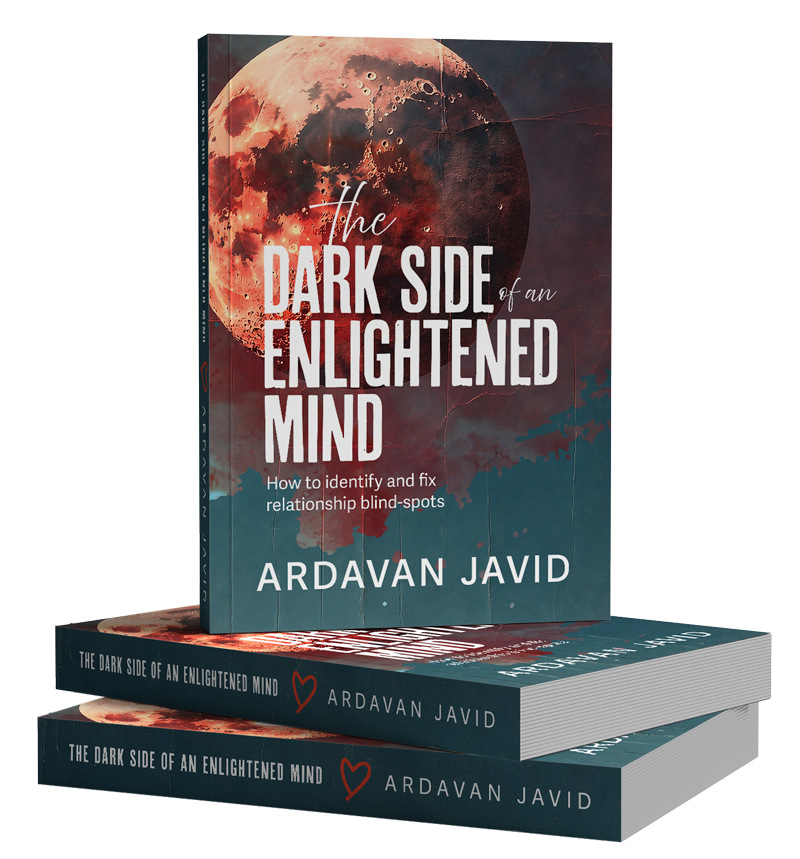

A relationship boundaries guide for naming your limits, voicing needs, and creating honest love after hurt, distance, or divorce has deeply changed you.

Soulmate connection versus trauma bond can feel confusing. Learn the signs, honor the lesson, and choose a relationship that feels safe and true again.

Learn how to express needs calmly without shrinking, blaming, or exploding, so you can build trust, clarity, and a different way of relating with love.

Learn the top signs of emotional flooding, why your body takes over during conflict, and how to pause before fear damages connection and trust fully again.